
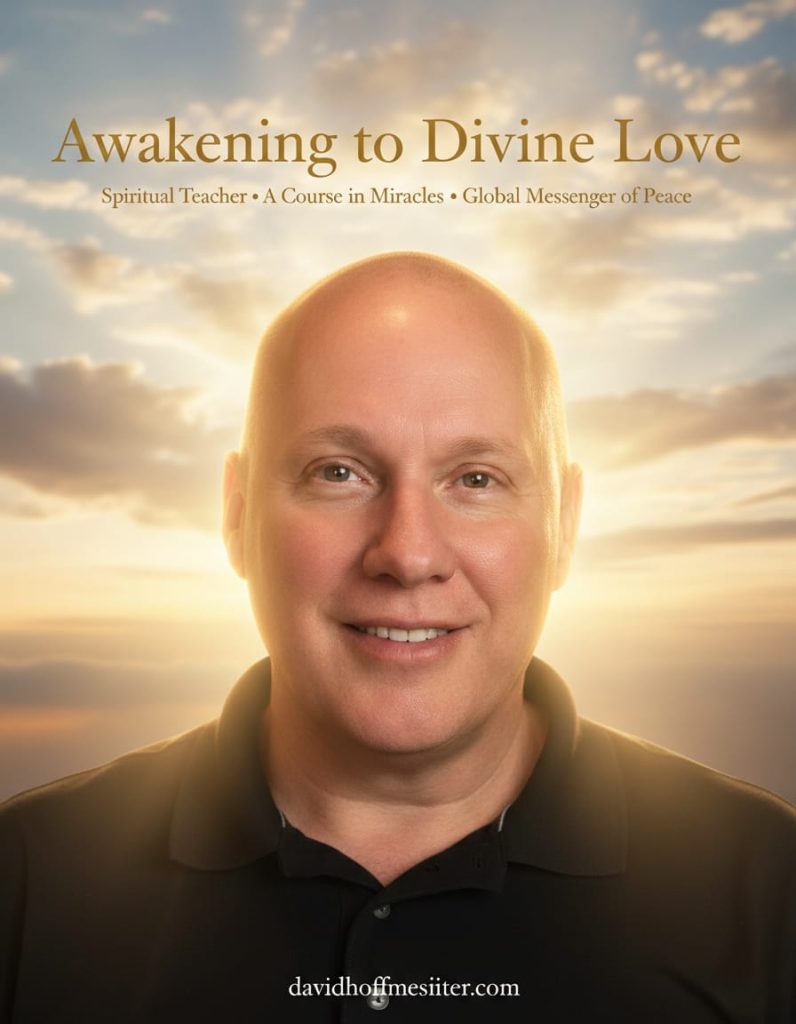
When individuals search david hoffmeister wikipedia, they usually want a factual overview—birthplace, spiritual affiliation, major works, and community involvement. While such information provides structural clarity, it does not fully illuminate the deeper dimensions about david hoffmeister and his long-standing dedication to A Course in Miracles (ACIM).
To understand his influence, one must move beyond surface-level biography and examine the philosophical, psychological, and practical implications of his teachings.
Early Life and Background
David Hoffmeister was born in the United States and raised within a conventional social and educational framework. Like many spiritual teachers of his generation, his early life did not outwardly signal an eventual shift into spiritual leadership.
He pursued academic and professional pathways typical for his cultural context. However, beneath this conventional lifestyle was a deeper existential inquiry. Questions surrounding purpose, meaning, and inner fulfillment gradually became more prominent.
This subtle but persistent inner questioning laid the groundwork for his later spiritual commitment.
Discovery of A Course in Miracles
The pivotal transformation in David Hoffmeister’s life occurred in 1986 when he encountered A Course in Miracles. The Course is a metaphysical text that reinterprets reality through the lens of forgiveness and non-duality.
Rather than treating ACIM as philosophical speculation, David approached it as a daily discipline. He systematically practiced the Workbook lessons, which are structured to dismantle ego-based thought patterns.
The core assertion of ACIM—that the world is a projection of the mind—radically shifts responsibility from external events to internal perception. David embraced this premise and began applying it to every emotional disturbance, conflict, or fear response.
Over time, he reported increasing clarity, inner peace, and intuitive guidance.
Central Themes in His Teaching
To explore about david hoffmeister, it is essential to understand several foundational themes that consistently appear in his talks and writings.
1. Forgiveness as Perceptual Correction
Forgiveness, in his framework, is not moral pardon. It is the recognition that perceived harm stems from mistaken interpretation. By withdrawing judgment, one restores inner peace.
2. Undoing the Ego
The ego is defined as a false identity rooted in separation and fear. David emphasizes that suffering originates from defending this false identity. Spiritual awakening involves observing and releasing these defenses.
3. Guidance Over Personal Will
A defining element of his path is surrender to inner guidance. Rather than making decisions based solely on logic or fear, he encourages quiet listening and trust in intuitive direction.
4. Practical Application
His teachings are not abstract theology. They are meant to be applied in relationships, career decisions, financial uncertainty, and emotional conflict.
Radical Trust and Lifestyle
David Hoffmeister’s life illustrates radical trust. Over decades, he gradually released conventional attachments—career ambitions, long-term financial planning, and rigid control over outcomes.
Instead, he allowed life circumstances to unfold through perceived divine guidance. Travel invitations, teaching opportunities, and living arrangements emerged organically rather than strategically planned.
This lifestyle challenges the modern paradigm that security arises from control. His example suggests that surrender may cultivate greater peace than prediction.
Global Outreach and Teaching
David has taught across North America, Europe, Latin America, and other regions. His gatherings typically include:
- Open question-and-answer sessions
- Deep discussions on forgiveness
- Practical demonstrations of perception correction
- Shared reflections on ACIM text passages
He avoids ritualistic structure or hierarchical authority. Instead, he fosters dialogue rooted in shared inquiry.
The emphasis is not on belief but on direct experience.
The Living Miracles Community
David is closely connected to the Living Miracles spiritual community, a collective dedicated to applying ACIM principles in daily life.
Community members practice:
- Emotional transparency
- Prayer-based decision-making
- Collaborative problem-solving
- Consistent forgiveness work
The community model serves as a laboratory for spiritual growth. Rather than isolating spirituality from daily responsibilities, it integrates practice into shared living.
Addressing Misconceptions
Individuals who initially encounter david hoffmeister wikipedia may assume traditional religious structure or doctrinal rigidity. However, David does not present himself as a religious authority.
He does not claim exclusive revelation. Instead, he consistently emphasizes that peace is accessible to anyone willing to practice forgiveness.
Critics sometimes question the concept of inner guidance. David’s response is pragmatic: test it through application. Observe whether surrender reduces fear and increases peace.
Psychological Dimensions
Though rooted in metaphysics, David Hoffmeister’s teachings align with contemporary psychological frameworks:
- Cognitive reframing parallels forgiveness reinterpretation.
- Mindfulness resembles observing thoughts without attachment.
- Emotional regulation arises from non-reactivity.
- Identity deconstruction mirrors ego dissolution concepts in depth psychology.
However, he extends beyond psychological healing into ontological inquiry—questioning the nature of reality itself.
Consistency and Integrity
One hallmark of long-term spiritual credibility is consistency. For decades, David Hoffmeister has maintained the same core message:
- The world reflects internal perception.
- Forgiveness dissolves conflict.
- Guidance replaces ego control.
- Peace is available now.
Such doctrinal stability reinforces the authenticity of his commitment.
Practical Implementation for Seekers
Those exploring about david hoffmeister can begin through structured practice:
- Commit to daily ACIM Workbook lessons.
- Identify recurring emotional triggers.
- Pause before reacting defensively.
- Ask internally for reinterpretation.
- Observe the shift in emotional tone.
This disciplined application gradually weakens ego-based identity.
Influence in the Digital Era
David Hoffmeister’s teachings are widely accessible online through recorded talks, interviews, and written materials. This accessibility allows seekers worldwide to engage with ACIM principles without geographic limitation.
The digital era has amplified his reach, enabling broader exploration of forgiveness-based spirituality.
Broader Cultural Relevance
In a world characterized by anxiety, competition, and polarization, David Hoffmeister’s model presents an alternative orientation:
- Peace over ambition
- Cooperation over competition
- Inner guidance over external validation
- Forgiveness over judgment
His approach addresses psychological distress at its perceptual root rather than merely treating symptoms.
Conclusion
Searching david hoffmeister wikipedia provides factual orientation. Delving deeper about david hoffmeister reveals a life dedicated to consistent spiritual practice grounded in forgiveness and surrender.
His example demonstrates that transformation does not require dramatic revelation but disciplined application. Through decades of unwavering commitment to ACIM principles, he illustrates that inner peace arises from corrected perception rather than controlled circumstances.
For seekers willing to test these principles, his life offers both inspiration and methodology.
